Where does health sit in your newsroom?
During the Covid-19 pandemic, it moved to the centre of coverage for many outlets. For almost two years, it was the story. But before and after that, health often has to compete with politics, business and other beats, and more often than not, it loses out.
So what changes when that competition disappears? What does a newsroom look like when health is at its core?
That is the question this piece explores through the work of Dr Mercy Korir and Willow Health Media in Kenya.
INNOVATION IN ACTION

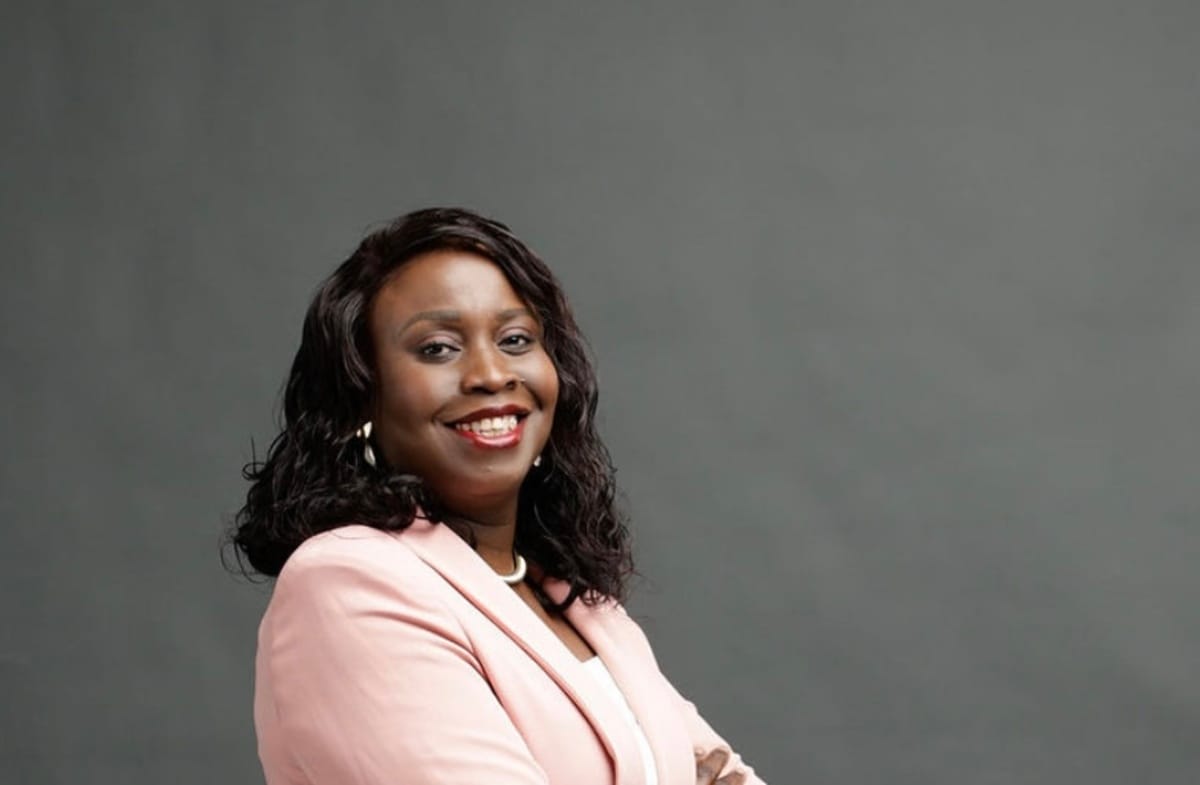
Willow Health’s Dr. Mercy Korir
AT A GLANCE
Who: Dr. Mercy Korir, medical doctor turned journalist, and founder of Willow Health Media
What: A digital-first health newsroom built to make health journalism clearer, more accessible, and more relevant to how people actually consume information today
The Problem: In most newsrooms, health competes with politics, business and breaking news, and often loses. Important health stories are squeezed for space, while medical information is often made harder to access by technical language, limited formats, and weak contextual reporting.
The Innovation: Willow puts health at the centre. It is video-first, adapted across formats, translated where needed, and shaped for real audience behaviour. The newsroom also uses AI in the workflow for research, summarising, editing and production, but keeps editorial judgment firmly in human hands.
Why It Matters: Health misinformation is becoming more visible, more persistent and, in some cases, more dangerous. Willow’s model suggests that strong health journalism is not just about accuracy, but about accessibility, trust, cultural context and meeting audiences where they are.
Go deeper: In addition to building a niche newsroom, Korir is trying to build a pipeline for the next generation of health journalists across Africa.
GO DEEP.👇🏾
In many newsrooms, health still sits on the margins. It competes with politics, business and breaking news in systems that often reward the loudest stories over the most important ones.
It was this gap that pulled Dr. Mercy Korir into journalism.
Korir trained as a medical doctor and even practised medicine before venturing into the newsroom.
She recalls being drawn to the profession during a doctors’ strike in Kenya, when demands for better pay and working conditions dominated the national conversation.
Yet, for her, the reporting did not fully capture the depth or context of the story.
That experience prompted her move into journalism, where she could tell stories from a sector she cared deeply about. She joined Kenya’s Standard Group, where she later established what was then the company’s first health and science desk.
It was that same sense that an important story was not being fully told that led her to found Willow Health Media - a newsroom devoted entirely to health, several years later.
Korir, who is also the CEO and Editor in Chief, says, “If you have a political story and a health story, chances are the political story gets the attention,” she says.
A newsroom for health
At Willow Health Media, Health isn’t competing with anything else. It is the story, and that’s what changes the kind of journalism they do.
The second area is structural.
Willow is digital-first, but more importantly, it is built around how people actually consume information today. Not how they used to.
In Kenya, as in much of Africa, audiences are not waiting for the evening bulletin or the morning paper. She says, “They are on their phones, moving between platforms; watching, scrolling, listening on demand.”
So their newsroom follows that behaviour.
Even though they produce some text stories, their platform is video-first, then adapted to different formats to cater to different audience preferences.
“It’s not about doing more, but about meeting people where they already are.”
Turning health jargon into plain language
Another layer that matters is accessibility.
Health information is often locked behind technical language. Medical terms that assume a level of prior knowledge.
Willow approaches this differently, first through the editorial process. Journalists without medical backgrounds ask the questions a general audience would ask. That forces clarity and simplification.
It also happens through design. Content can be translated into multiple languages and adjusted for different audiences. It can also be made accessible to people who are visually impaired or hard of hearing.
And partly through mindset. When Korir interviews medical experts, she gives them a simple instruction: Explain this as if you’re speaking to a patient, and not to experts in a conference room.
“This alone changes everything.”
AI in support
According to Korir, technology plays a role, but not in the way it is often framed.
They have integrated AI into their workflow - mainly for research, summarising large volumes of information, plus for editing and production. She says, “It helps us move faster, but it doesn’t decide what we do.” She adds, “Every piece of content still passes through human hands, and every story is still shaped by editorial judgment.”
According to Korir, that distinction is important, especially now, when the conversation around AI is driven by fear.
But the bigger test comes once that journalism meets the real world, especially in an environment increasingly shaped by misinformation.
Responding to misinformation with care
“Health misinformation is not a new problem. But it has become more visible. More persistent. And, in some cases, more dangerous.” She says.
Korir points to vaccination as one example. Something that was widely accepted not long ago, but is now increasingly questioned in some circles.
The instinct in journalism is often to correct, challenge directly, and to tell people what is right and what is wrong.
Willow takes a slightly different approach. They not only explain, but also break things down, starting with the basics, supported by data, and then they let the audience follow the logic.
“What we do is lay out the information in a non-confrontational and non-judgemental way.” She says, “This requires restraint and also trust in the audience.”
Why context matters
“Health reporting in Africa doesn’t sit in a vacuum. It intersects with culture, belief, and history.”
Korir gives a practical example from Turkana, in northern Kenya.
Some women avoided hospital births because of cultural practices around childbirth, including how they deliver, and what happens to the placenta afterwards.
For a long time, that gap wasn’t understood. The response was to encourage hospital births without addressing the underlying concerns.
Once those cultural factors were recognised and accommodated, behaviour changed. They started to see more women coming to hospitals, which was followed by better outcomes.
“This was a reminder that sometimes information alone is not always enough; a lot of the time, you also need to understand the context under which you’re operating.”
Training future journalists
So what else is Willow Health Media building?
Korir says the aim is to go beyond producing health stories into building the next generation of health journalists. The idea is to create a place where people can learn, grow, and then move on to other newsrooms across the continent, taking those skills with them.
It is an ambitious vision, and a direct response to a gap that has long gone underserved.
🚀OPPORTUNITIES WORTH KNOWING
The good stuff: upcoming events, grants, training programs, jobs, and more
AWJP x DW Akademie Gender + AI Reporting Fellowship 2026 — Kenya
The Africa Women Journalism Project, in partnership with DW Akademie, is running the second cohort of its Gender + AI Reporting Fellowship for women journalists in Kenya, supporting them to investigate how AI and digital technologies affect women and gender-diverse communities while learning to use AI tools to strengthen their reporting.
📩 Apply
ℹ️ Deadline - 15th April
INMA 30 Under 30 Awards 2026
INMA's 30 Under 30 Awards recognise five outstanding individuals across six global communities (Advertising, Data, Management, Editorial Leadership, Product, and Reader Revenue)
Deadline: 19 June 2026.
INMA Africa Elevate Scholarship 2026
The programme covers professional mentorship, navigating the corridors of power in media, understanding the business of media, and AI applications, across four virtual modules with certification on completion. INMA Up to 50 scholarships are available, with masterclass options including Subscriber Retention, Newsrooms & AI, Product & Tech, and Digital Advertising.
This Issue Brought to You By Reebo Consult
We work with media organisations to turn big ideas into real impact — integrating AI, navigating digital shifts, and rethinking editorial strategy for the future. Curious about what that could look like for you? Let’s connect. Send me an email.
Help us keep sharing real stories
▶ Know someone who’d love this? Forward it their way.
▶ Was this email forwarded to you?