
How do you get young people to care about the news? It’s one of the most challenging questions in journalism right now.
More than 70% of the African population is under the age of 30. Yet research shows they are disengaging from traditional media platforms. Could sparking curiosity be the way back in?
At the Africa Media Festival in Nairobi earlier this year, I sat down for a podcast interview. The host was an 11-year-old girl.
She worked for Mtoto News, a child-led newsroom where nine-year-olds report the news and 13-year-olds dissect national budgets on camera. It made me wonder whether this could be a way of getting young people not just to consume the news, but to care about it?
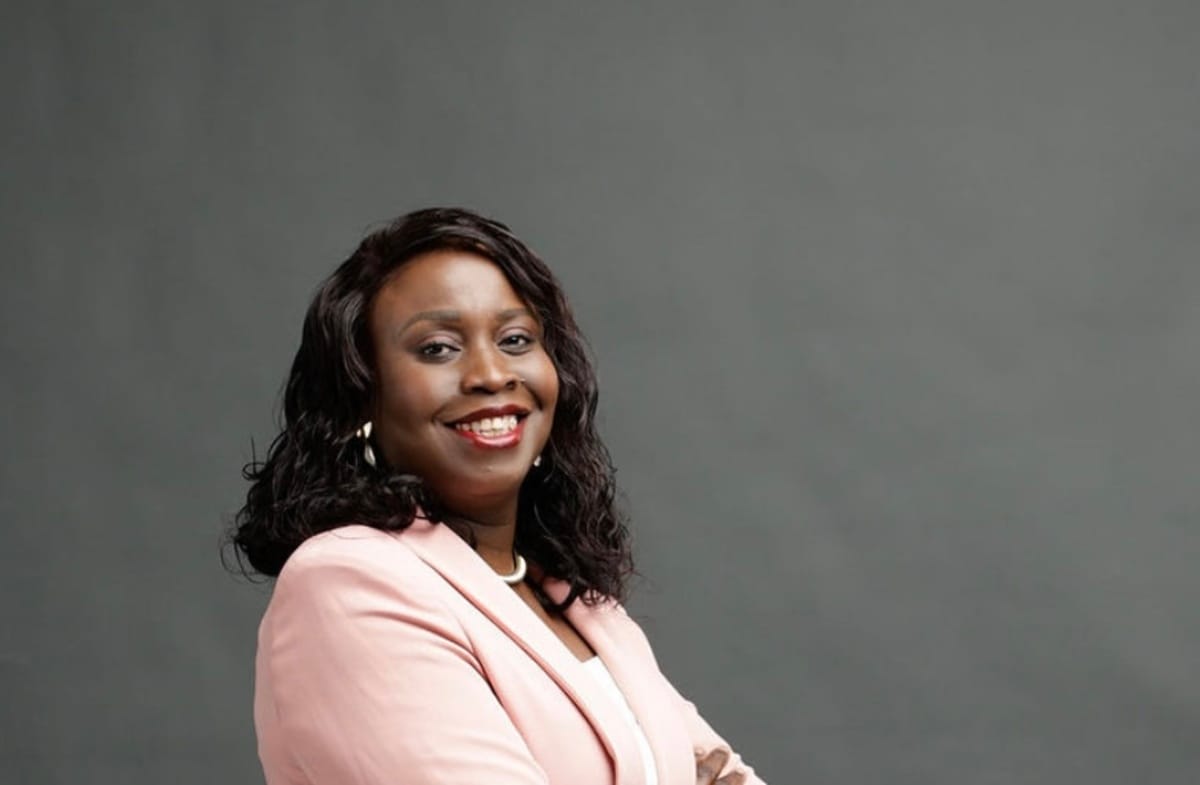
In this edition, I spoke with the founder, Jennifer Kaberi, about why she is trusting children to tell their own stories first.
But first, you can watch the podcast I recorded with 11-year-old Francesca here.
INNOVATION IN ACTION
Mtoto News: the Kenyan newsroom run by children

Jennifer Kaberi
AT A GLANCE
Who: Jennifer Kaberi a Kenyan journalist launched Mtoto News in 2017 from a Twitter account in Nairobi. Seven years later, it’s one of Africa’s most distinctive child-led newsrooms, reaching 10 million people annually. Mtoto means child in Swahili.
The Story: Frustrated that children only appeared in mainstream news as sob stories with no solutions, Kaberi stopped waiting for editors to take children’s issues seriously and built her own platform. She started by curating stories from Kenyan broadcasters, then trained children to become the journalists themselves – reporting from their own perspectives, holding power to account, and setting their own editorial agenda.
The Innovation: At Mtoto News, children actually produce the news. A 13-year-old dissects Kenya’s Children Act on camera. Two 11-year-olds interview CEOs. Young people design their own shows, choose their topics, and when they turn 16, they recruit their own successors. The model treats children as journalists first, not just subjects of coverage.
Why It Matters: This year, coverage by Mtoto News helped redirect $6.5 million in the national children’s budget. When the smallest voices can shape policy faster than some large institutions, is there something the rest of us should be learning from them?
GO DEEP.👇🏾
Mtoto News has grown into one of Africa's most distinctive child-led newsrooms – and this year, its young reporters pulled off something extraordinary. Their coverage helped shift a billion Kenya shillings (around 6.5 million USD) in the national children's budget - a fundamental policy change, driven by children asking the right questions.
The digital media newsroom was launched first as a Twitter account (now X) by Jennifer Kaberi, a Kenyan journalist who previously worked with UNICEF.
According to Kaberi, who is now the Executive Director, she started by curating children’s stories from Kenyan broadcasters and repurposing them, later adding a blog where she wrote daily on themes such as children and technology, plus education and business.
She says she came up with the idea because she felt that issues that affected children were not given adequate coverage in mainstream media.
And in the few that were covered, children were always portrayed as ‘sob stories’ with no sense of solutions or agency.
She decided to change the narrative, not just in how we tell children’s stories, but in who gets to tell them.
Her background working with the UN’s children’s agency, coupled with her journalism training, gave her the confidence to start the platform.
Built on a dining table with family loans
She used savings and family loans to bring in interns – paying for their transport and lunch while they worked from her dining table.
Now in its seventh year, Mtoto News runs a structured pipeline: children start with training programmes like “Sauti Zetu” that introduce storytelling, basic journalism, ethics, research, interviewing, and production skills. “We don’t design the shows for them – they design the shows themselves,” Kaberi explains, describing how young participants choose their medium, define their topics and work through a design-thinking process to shape their own programmes.
The 13-year-old dissecting Kenya's Children Act
Their programme lineup is very impressive, with a range of output.
"Jotunasharia" – children and law – is fronted by a 13-year-old who breaks down Kenya's Children Act and budget allocations, and invites government officials to explain how policies affect children's lives.
There's a mental health show designed by young people. And "Mission Accomplished", where two 11-year-olds interview CEOs about how they built their careers.
"Children have a brain," Kaberi says. "They can talk about topics that adults think are ‘too serious' and contribute meaningfully if you don't look down on them."
In May and June, Mtoto News devoted its coverage to Kenya's children's budget, bringing government officials onto its shows to face questions from children. "After that, the budget was increased by a whole billion Kenya shillings," Kaberi says. "And it is just because the children spoke."
The flagship news magazine has a strict age limit: presenters must be between nine and 15. When they turn 16, their roles are declared vacant, and younger children step in. "The older ones will say, 'I think so-and-so can do it better than me, can you try them?' They literally help recruit their successors.” She says.
How does she safeguard children in a digital environment?
Working with children in a highly visible digital environment poses risks that Kaberi doesn't minimise. Every child who comes through the newsroom is trained on online safety, privacy and digital resilience.
"You cannot remove children from the internet," she argues. "You just need to empower them to navigate the digital space – the way we added seatbelts and airbags to cars instead of stopping people from driving."
The organisation also works with technology companies to advocate for safer product features and runs programmes for parents. "If the parent is empowered, they will empower their child; if they are not, the child will be at risk."
The business model
Mtoto News has grown, she says frugally, with one second-hand chair at a time. Kaberi runs a lean operation: careful budgets, borrowed desks, and a philosophy that treats in-kind support as seriously as cash. Revenue comes from a blend of consultancy work, project funding, the odd grant, and what she calls “freebies that turn into business”- doing quality work first, earning trust, before charging fees once trust is established.
What has she learned?
Building a youth-focused newsroom has not been easy in a challenging funding environment, but these experiences have come with some lessons.
"Don't wait to go from one to one billion in a day," she advises. "The stars don't align in front; they align behind you when you start walking.”
Collaboration runs through Kaberi’s model, from early partnerships with parenting bloggers to ongoing engagement with local creative communities such as Baraza Media Lab. “Don’t work alone,” she advises. “Have a board – even if it is just friends, a former lecturer, people you trust – who can help you prioritise, because as a visionary you have so many ideas.”
The Mtoto News’ website is deliberately split between adult and child sections, reflecting its dual audience of parents, policymakers, students and children aged roughly seven to 17, with new content now also targeting the under-sevens through animation. Mtoto News now draws between 10,000 and 15,000 visitors a month, and through its TV and digital partners, its stories reach close to 10 million people a year.
The future:
Mtoto News plans to set up in Mozambique partnering in South Africa, and are dreaming big. She wants to build what she calls “the CNN of children” — a pan-African network where young voices set the agenda.
Across a continent where more than 70% of the population is under 30, young audiences are tuning out of traditional media. Could child-led newsrooms like this be the way back in?
🚀OPPORTUNITIES WORTH KNOWING
The good stuff: upcoming events, grants, training programs, jobs, and more
Editors-at-Large (Uganda)- ACME
Call for expression of interest: ACME seeks Editors-at-Large for new journalism support initiative in Uganda
Social Media Journalist (Kenya) - BBC News
The BBC is looking for a motivated journalist with experience in video editing, social media analytics, writing scripts and social media posts as well as the use of tools like Canva, Emplify and Social Flow.
Journalist Amharic (Kenya) - BBC News
As a Journalist with the Amharic team, you will create content to maximise the BBC World Service’s impact and potential in Africa. The role will involve researching, interviewing original sources, writing reports and presenting for the BBC Amharic website, Radio and Social Media in a range of formats.
Digital Senior Research Officer (Nigeria) - BBC Media Action
Multimedia Producer (Kenya) – Voice Over Artist, Roving Reporter, and Self-Shot Video Producer - UNEP
CALL FOR AFRICAN FILMMAKERS + VIDEOGRAPHERS 🎥
An opportunity to have your short film showcased in the United Kingdom.
Deadline: Friday, 12 December – 5 PM EAT
All info you need is here: https://www.instagram.com/reel/DSHb5tsiMHS/?igsh=b3Vhem9kY20wYjN0
This Issue Brought to You By Reebo Consult
We work with media organisations to turn big ideas into real impact — integrating AI, navigating digital shifts, and rethinking editorial strategy for the future. Curious about what that could look like for you? Let’s connect. Send me an email.
Help us keep sharing real stories
▶ Know someone who’d love this? Forward it their way.
▶ Was this email forwarded to you?