
I’ve been fascinated by the rise of independent news content creators. I am talking about both the social media influencers who started breaking down the news for their followers, and the professional journalists who started off as mainstream journalists. Why are audiences flocking to these creators?
Early this year, I made a short video about how journalists of the future will have to start thinking like creators but lead like editors.
I am reproducing the script below as it’s relevant to our innovator in this edition.
Editors used to be known as the gatekeepers of trust, and that’s why audiences came to us. But that is changing.
Young people, who make up the majority of our audiences in Africa, are turning to creators, influencers on social platforms and even family and friends - for news, context, and opinions that they trust.
They appear to trust them because they find them more relatable (read less elitist), consistent and easier to understand.
You might fear that this will dilute journalism or compromise our standards. But what can we learn from this new editorial power?
These audiences prefer:
Authenticity, yeah - being real over being official.
Showing up consistently rather than relying on your historical reputation.
And let’s face it, a personality. By this, I mean a voice that connects rather than just a prestigious institutional brand.
So, what can newsrooms and journalists learn from this?
You’ve got to come across as human. It’s getting clearer that people (especially youth) trust people, not just brands. They are not loyal to media brands and institutions.
When thinking about the audience, see them as a community, not just a bunch of followers.
They value journalism, but it has to be conveyed in a voice they find relatable.
And that voice includes not what you say or write alone, but how you say it, your vibe, and the way you come across.
It’s the human connection.
And whether we like it or not, that’s how trust is being built in today’s evolving media world.
That’s why I enjoyed speaking to top South African journalist Kgomotso Modise, who has ventured into the world of news content creation. Read more of her story in this week’s ‘Innovation in Action’ section.
INNOVATION IN ACTION
From newsroom to newsfeed: Kgomotso Modise and the rise of the journalist–creator

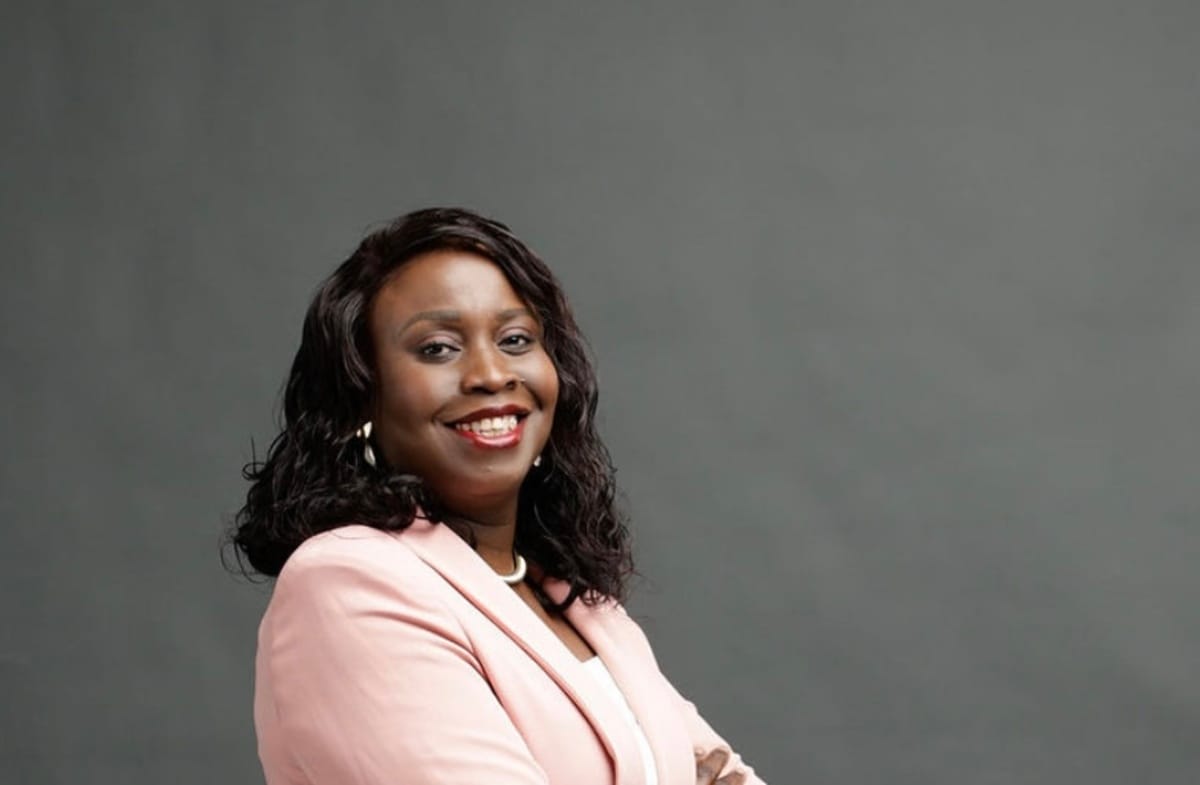
Kgomotso Modise (Courtesy photo)
AT A GLANCE
Who: Kgomotso Modise is a multi-award-winning South African journalist and independent digital storyteller with over 300k combined followers on TikTok and Instagram.
The Story: Frustrated by rampant misinformation, she stopped correcting false claims in comment sections and started building her own platform for verified news, delivered in sharp, three-minute explainers that blend reporting, analysis, and personality.
The Innovation: She rejects the divide between newsroom journalism and digital creation, treating them as "one world of news" delivered through different formats. She reports from commissions and courtrooms by day, then breaks down the same stories online, translated for mobile-native audiences without sacrificing editorial rigor.
Why It Matters: Kgomotso’s approach shows how African journalists can counter misinformation, rebuild trust, and meet audiences where they actually are, all while staying true to the fundamentals of the craft. Her success also raises an uncomfortable question for newsrooms: What happens when your best journalists can reach more people and build more credibility on their own?
GO DEEP.👇🏾
Kgomotso Modise doesn't flinch when people call her a creator. She just tilts her head, slightly amused, and argues that they're two sides of the same coin. “I don’t think of it as separate worlds,” she says.
With a combined following of more than 300k on TikTok and Instagram, her sharp, three-minute explainers, equal parts verified reporting, analysis, and personality, have built an engaged audience, with some of her videos garnering over a million views.
According to Kgomotso, who only started seriously sharing news content just four months ago in July, the audience doesn't care which newsroom she works for. She says they care more about the fact that she tells the truth, quickly, and in a way that feels human to them.
Is she a journalist or a content creator?
She still works as a reporter for South Africa’s Eye Witness News (EWN), and sees herself as both a mainstream journalist and a digital creator.
“As journalists, we’ve always been creating content. The difference now is in the how,” she says. “At our core, we’ve always been storytellers.”
That mindset explains her leap into TikTok and Instagram, because it didn't feel like a career pivot. She says it felt natural.
It started with frustration
"I got tired of being the lady in the comments saying, ”That's not true”, she says. Misinformation was everywhere, especially on TikTok.
So she got fed up with arguing with strangers in the comments and decided to build her own space for verified information. "Let me just do it on my platform, so people can come straight to me.”
Her videos are quick and clean, built for scrolling. Instagram's algorithms keep her under three minutes.
What She Had to Unlearn
She says that TikTok's moderation rules have even affected her vocabulary. "I've caught myself in a radio interview almost saying unalived," she laughs, because the algorithm deprioritises words like “killed”.
But nothing about her work is off the cuff. It's built on the same reporting discipline she used in her traditional newsroom at EWN.
The difference is tone, not rigor. "The stories are often the same," she says. "I cover a commission or court case during the day, then break it down further online, with my personality, my analysis, and my reaction.”
Seeing the Gap
Younger audiences no longer consume news through bulletins or print, and even older audiences “aren’t consuming the news the way we did.”
Attention has migrated to the phone; journalism has not followed quickly enough. “People are definitely scrolling,” she says. “And if I could give them the news with a bit of me… but still keep them informed, I’ll definitely do that.”
She says the shift is not only about delivery but also about credibility, describing personality-driven news as a mechanism for trust. People follow the face, not the institution. They come back because they recognise her voice, her tone, her humour. The familiarity becomes a form of reliability.
Kgomotso is part of a growing wave. Research from FT Strategies and Google News Initiative shows that news creators -journalists who build direct audiences on social platforms are now reaching millions who've stopped following traditional outlets. They are real reporters doing the work: verifying facts, breaking stories, holding power to account.
Their influence has pushed traditional news organisations to try to catch up. Some are now encouraging their own journalists to think like creators, build personal brands, and engage directly with audiences to meet them where they actually are.
For her, showing personality is a way of connecting with the audience as they are beginning to trust more people and fewer institutions. So they “come for my familiar face, the friendly voice, the approach and this is what makes me credible and relatable to them”. She adds.
The Weight of Responsibility
That trust, though, carries weight. With independent news creators on the rise, what happens when people without journalistic training step into the same role? They don’t have the training, and some might not follow the traditional journalism ethics. So should they be held to the same high standards as journalists?
"They should absolutely be held accountable," Kgomotso says. "Anyone choosing to inform the public has taken on responsibility." The difficulty, she acknowledges, is enforcement.
The problem is that social platforms were never designed for accountability. "Now, people can claim journalistic authority one moment and deny it the next. It creates an environment where misinformation thrives.”
How she works
Despite the intensity of this environment, her workflow remains astonishingly simple. "This," she says, holding up her phone, “is virtually the only tool I use”.
The real work happens off-camera by reading, tracking, and staying ahead of the news cycle. “You must consume news.” She mentions another creator who spends four hours every morning reading before posting. "That's what separates serious news creators from opportunistic ones”, she says.
I ask her if she’s managed to monetise her content, but she says she’s not chasing monetisation yet. But her success has opened doors: she’s received other development opportunities such as speaking engagements and training. She's already mentoring colleagues and emerging news creators, helping them use these platforms to tell credible stories.
Is there enough room for many digital news creators?
"If you can name thousands of beauty influencers," she says, "why can't we do the same for professional news creators?”
What Comes Next
If Kgomotso could rebuild the African newsroom from scratch, she knows where she'd start: hiring differently.
She wants spaces led by digitally fluent journalists who understand where audiences actually are. “I think we must continue to stick to the fundamentals, such as the ethics,” she says, "but we need to stop being obsessed with tradition." She says this is important because audience habits are shifting.
Kgomotso Modise’s success, like that of many other digital news creators, raises an uncomfortable question for traditional newsrooms: What happens when your best journalists can reach more people and build more trust on their own than they ever could under your brand?
🚀OPPORTUNITIES WORTH KNOWING
The good stuff: upcoming events, grants, training programs, jobs, and more
▶ 📢 Multimedia Producer, the Fuller project
Apply here 👉 https://fullerproject.org/multimedia-producer/
▶ Senior Editor, Defrontera
Defrontera is hiring a Senior Editor to drive, commission, edit, editorial workflow, and the overall quality of our journalism
▶ 🎙️ Senior Reporter,AmaBhungane
Calling all muckrakers, truth-diggers and fearless investigative journalists — amaBhungane is hiring. Join South Africa’s leading investigative journalism team and be part of a small, dedicated newsroom committed to public-interest, high-impact reporting.
This Issue Brought to You By Reebo Consult
We work with media organisations to turn big ideas into real impact — integrating AI, navigating digital shifts, and rethinking editorial strategy for the future. Curious about what that could look like for you? Let’s connect. Send me an email.
Help us keep sharing real stories
▶ Know someone who’d love this? Forward it their way.
▶ Was this email forwarded to you?